
 Apply For a Mortgage
Published: February 4th, 2026 • Last Updated: February 4th, 2026
Author: Ross Taylor on AskRoss.ca
How to Prepare for Your Mortgage Renewal and Rising Rates in Canada
If you took out a fixed-rate mortgage between 2020 and 2022, chances are you locked in at a once-in-a-generation low.
You might be paying 1.5% to 2.5% right now, and enjoying some of the lowest mortgage payments you’ll ever see in your lifetime.
But here’s the reality.
Those golden-era rates are expiring, and for hundreds of thousands of Canadian homeowners, that means a serious wake-up call is coming from 2025 and going into 2026.
I’m already having conversations with clients who are anxious about what happens next.
Their mortgage renewals are around the corner, and they’re hearing things like “payments could jump 20%” or “rates will stay high into 2026.”
Understandably, they’re worried. And now is the time to prepare.
Let’s break this down and walk through 10 things you can do right now to protect your finances and avoid getting caught off guard.
Jump to a specific section in this article ↓↓
- Why are mortgage payments rising so much in 2026?
- 10 Smart Things You Can Do Before Your Mortgage Renews In 2026
- 1. Extend your amortization to lower your monthly payment
- 2. Lock in your rate early, up to 120 days ahead
- 3. Run a stress test on your personal budget
- 4. Consider a shorter-term fixed or discounted variable
- 5. Refinance to consolidate your high-interest debt
- 6. Shop around, don’t just sign your lender’s renewal offer
- 7. Tap into your home equity with a HELOC or second mortgage
- 8. Clean up your credit before renewal
- 9. Talk to your lender about hardship programs if needed
- 10. Start planning at least 6–12 months before your renewal date
- Advice from Ross Taylor Mortgages: How to prepare for your 2026 mortgage renewal
- List of all FAQs: Managing Your Mortgage Renewal in 2026
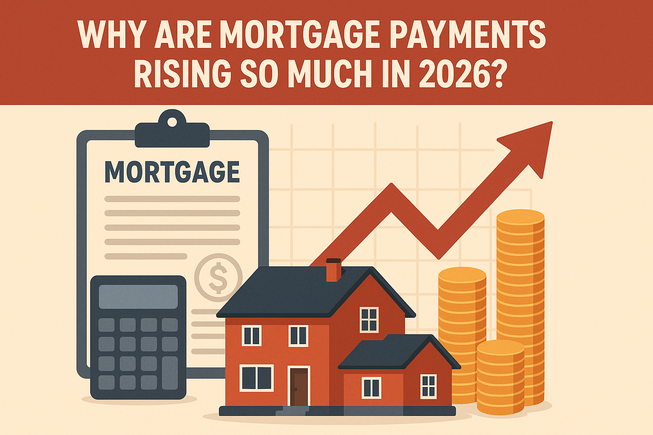
Why are mortgage payments rising so much in 2026?
We’re heading into a major renewal cycle, with over 1.8 million Canadian mortgages set to renew from 2025 and into 2026.
Many were taken out during the pandemic, when rates were under 2%. Now, fixed rates are around 4.5%, and variable rates are near 5%, which is more than double in some cases.
What kind of payment jump are we talking about?
- Monthly payments could rise 6% to 20%.
- Five-year fixed holders from 2021 may see the biggest jump.
- On a typical mortgage, payments could hit $2,880, with $1,930 going to interest.
If you’re not prepared, this kind of increase can seriously strain your budget.
↑↑ Back to the list at the top ↑↑

10 Smart Things You Can Do Before Your Mortgage Renews In 2026
So what are your options if you can’t afford your new payment?
Let’s walk through a practical checklist to reduce the size of your payment shock, manage your risk, and keep your mortgage working for you.
↑↑ Back to the list at the top ↑↑
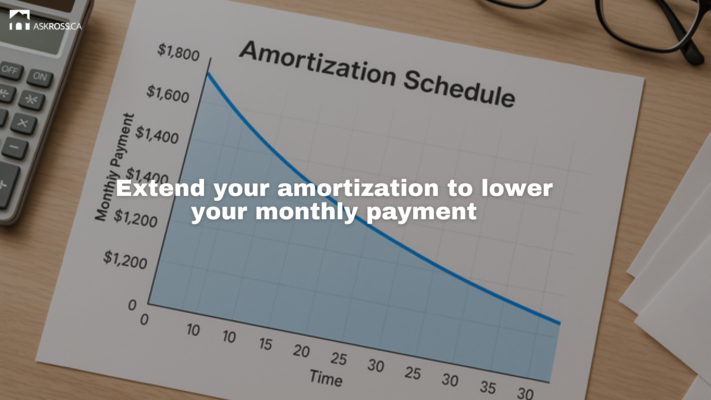
1. Extend your amortization to lower your monthly payment
For many homeowners renewing in 2026, the biggest concern isn’t the interest rate itself. It’s whether the new monthly payment fits comfortably within today’s budget.
If your income hasn’t risen, extending your amortization can be one of the most effective short-term tools to manage payment shock.
By spreading the remaining mortgage balance over a longer period, you reduce the required monthly payment, even at a higher rate.
This doesn’t eliminate interest costs, but it can maintain cash flow stability.
How does extending my mortgage lower my monthly payment?
- Works forrefinances and renewals where lenders allow amortization resets.
- Available through insured 30-year programs for eligible borrowers, including certain new builds or first-time buyers.
- Can be used strategically as a temporary relief measure, with the option to accelerate payments later when rates change or your income increases.
↑↑ Back to the list at the top ↑↑
2. Lock in your rate early, up to 120 days ahead
One of the biggest mistakes I see is homeowners waiting until their renewal date is right in front of them. Most lenders allow you to secure a rate hold for 90 to 120 days before maturity, which gives you protection while still leaving room to plan.
This approach gives you certainty in an uncertain market. You’re protected if rates rise further, and in many cases, you can still benefit if rates fall before funding.
What are the benefits of locking in my rate early?
- Locks in your worst-case scenario, removing last-minute pressure.
- Some lenders allow one-time float-down options if rates improve.
- Gives you time to compare lenders, run numbers, and adjust strategy without urgency.
↑↑ Back to the list at the top ↑↑
3. Run a stress test on your personal budget
Your lender will test your affordability, but that doesn’t mean it reflects your real life.
Before renewal, you should run your own stress test based on your household spending, goals, and comfort level.
This means modelling your mortgage payment not just at today’s rates, but at rates 1% higher, and seeing how that fits alongside groceries, childcare, transportation, and savings.
Why would I test my personal budget?
- Helps you identify your true maximum comfortable payment, not just what a lender approves.
- Informs your decisions about fixed vs. variable and term length.
- Highlights whether changes like debt consolidation or mortgage extensions are necessary.
↑↑ Back to the list at the top ↑↑

4. Consider a shorter-term fixed or discounted variable
A five-year fixed mortgage is often presented as the default, but in a shifting rate environment, it’s not always the smartest choice.
If rates are near their peak, committing to a long-term plan can limit flexibility.
Shorter fixed terms or discounted variable options can act as a bridge strategy, allowing you to reassess once markets stabilize.
Are there benefits to going variable?
- Provides flexibility if rates fall in 2026 or 2027.
- Often comes with lower penalties if you need to break the mortgage early.
- Can reduce upfront costs compared to locking into a long fixed term at peak rates.
↑↑ Back to the list at the top ↑↑

5. Refinance to consolidate your high-interest debt
Higher mortgage payments often collide with other expensive debts.
Credit cards, lines of credit, and personal loans can quietly drain cash flow, making renewal stress much worse than it needs to be.
Refinancing to consolidate those debts into your mortgage can lower total monthly obligations, even if the mortgage payment itself increases.
Why should I consider refinancing?
- Replaces 20%+ interest debt with 4–5% mortgage interest.
- Can be paired with amortization adjustments to smooth overall cash flow.
- Simplifies finances into one predictable monthly payment.
↑↑ Back to the list at the top ↑↑

6. Shop around, don’t just sign your lender’s renewal offer
Your current lender’s renewal offer is often convenient, but it’s rarely the most competitive.
Lenders know many homeowners won’t shop around, and renewal pricing reflects that.
Even a small rate difference can mean tens of thousands of dollars over a full term.
Why should I see what my options are?
- Switching lenders can unlock better rates, features, or prepayment options.
- Many lenders cover legal and appraisal fees to attract switchers.
- A broker compares options across the market, not just one institution.
↑↑ Back to the list at the top ↑↑
7. Tap into your home equity with a HELOC or second mortgage
Home equity can be a powerful safety net when used responsibly.
A HELOC or second mortgage can provide temporary liquidity to bridge income gaps, fund major expenses, or stabilize finances during transition periods.
This strategy works best when there’s a clear exit plan, not as a permanent solution.
Why should I consider a second mortgage or HELOC?
- Useful for short-term cash flow needs or emergencies.
- Can prevent forced decisions, such as selling during an unfavourable market.
- Should be used with discipline to avoid long-term interest-only dependence.
↑↑ Back to the list at the top ↑↑

8. Clean up your credit before renewal
Your credit profile plays a much bigger role if you plan to switch lenders orrefinance.
Even small improvements can significantly expand your options and reduce borrowing costs.
The key is starting early, because credit improvements take time to show up on your credit report.
What should I do to clean up my credit?
- Ensure all accounts are current, with no late payments.
- Keep balances below 30–50% of available limits.
- Avoid new credit inquiries in the 6–12 months before renewal.
↑↑ Back to the list at the top ↑↑

9. Talk to your lender about hardship programs if needed
If the new payment simply isn’t manageable, the worst thing you can do is stay silent. Lenders are far more willing to help before payments are missed.
There are structured programs designed to support borrowers through temporary financial strain.
What support is available to me if I can’t afford my mortgage?
- Options may include temporary interest-only payments.
- Payment deferrals or term extensions may be available under hardship policies.
- Insured mortgages may qualify for CMHC or insurer-based relief programs.
↑↑ Back to the list at the top ↑↑

10. Start planning at least 6–12 months before your renewal date
The earlier you start, the more control you have. Planning ahead allows you to optimize credit, adjust debt, and lock rates strategically, rather than reacting under pressure.
This is the single biggest difference between a smooth renewal and a stressful one.
When should I start preparing, and how should I do it?
- Review key details like renewal date, balance, and remaining amortization.
- Run multiple payment scenarios with your broker.
- Build a proactive plan around prepayments, savings, and refinancing options.
↑↑ Back to the list at the top ↑↑

Advice from Ross Taylor Mortgages: How to prepare for your 2026 mortgage renewal
If you’re facing a mortgage renewal in 2026, you’re not alone, and you’re not powerless.
Yes, your payment might go up.
But with the right strategy, proper timing, and a broker in your corner, you can manage the impact, preserve your financial health, and keep your mortgage working for you, not against you.
Here’s what I want you to do next:
- Check your mortgage details now: renewal date, balance, and remaining amortization.
- Stress-test your budget. Can you handle a payment increase of $400–$800?
- Explore your rate options, don’t default to a 5-year fixed without comparing.
- Get your credit and debts in shape, especially if you’ll be switching or refinancing.
- Work with a broker early, and my team will walk you through every option and tailor a strategy for your specific situation.
If you’re not sure where to start, reach out. We’ll run the numbers together and make sure you’re prepared for your renewal.
↑↑ Back to the list at the top ↑↑

Ross Taylor Mortgages
If you want great service from someone you can trust – reach out to us today.
Get quick answers to your questions, no matter how difficult – 7 days a week.

List of all FAQs: Managing Your Mortgage Renewal in 2026
Why are mortgage payments rising so much in 2026?
- Over 1.8 million mortgages are renewing between 2025 and 2026, moving from low pandemic-era rates to much higher rates, with many doubling.
What kind of payment increase can I expect?
- Depending on your mortgage, you could see payment jumps from 6% to 20%, with five-year fixed holders from 2021 hit the hardest.
How can I reduce my mortgage payment at renewal?
- Extend your amortization, consolidate debt, explore rate options, or refinance to spread costs more efficiently.
Should I lock in a rate before my renewal date?
- Yes, many lenders let you lock in 90 to 120 days early, helping you avoid rising rates while still giving flexibility if rates drop.
Is it better to switch lenders or stay with my current one?
- It depends on your goals. Often, switching can provide better rates and features, and many lenders cover fees to win your business.
Can I refinance to consolidate other debts into my mortgage?
- Yes, consolidating high-interest debt into a lower-interest mortgage can improve overall cash flow and simplify your payments.
How early should I start planning for renewal?
- Ideally, 6–12 months in advance, so you have time to improve your credit, explore options, and stress-test your finances.
What if I can’t afford the new mortgage payment?
- Talk to your lender early about hardship programs, deferrals, or explore second mortgage/HELOC options with a broker.
Does my credit score affect my renewal options?
- Yes, especially if switching lenders or refinancing. Clean up your credit early for better rates and more flexibility.
What’s a good strategy if I think rates might fall after 2026?
- Consider a shorter fixed-term or variable-rate product to stay flexible while waiting for better long-term options.
Can I still qualify for better rates if I’ve missed payments?
- It depends on your credit recovery and current profile. In some cases, alternative or B-lenders may offer options, but with different terms.