
 Apply For a Mortgage
Published: July 30th, 2026 • Last Updated: July 30th, 2026
Author: Ross Taylor on AskRoss.ca
A Guide for Canadians Who Owned a Home Years Ago and Want to Buy Again
You owned a home once. You sold it, rented for a decade, and now you’re ready to buy again.
You might have heard you can count as a first-time buyer all over again.
That’s right, but it’s also wrong.
Canada has three definitions of a “first-time home buyer,” and they do not agree with each other.
I have this conversation almost every week. Usually with a client coming out of a separation, or someone who sold their home to take a job in another city and has been renting ever since.
You’re finally ready to buy a home again. So you budget for a rebate that is never coming, and miss one that was sitting in front of you the whole time.
Jump to a specific section in this article ↓↓
- How many definitions of first-time home buyer does Canada actually have?
- Why does Ontario refuse to give your first-time buyer status back?
- Can you open an FHSA if you owned a home years ago?
- Can you use the RRSP Home Buyers’ Plan a second time?
- What is the First-Time Home Buyers’ Tax Credit actually worth in 2026?
- Do you qualify for the HST rebate on a new build?
- Can you get a 30-year amortization?
- Can your partner still claim the Ontario refund if you owned before?
- What does this actually cost you at closing in Toronto?
- Advice from Ross Taylor Mortgages: Planning Your Return to Ownership
- List of All FAQs: Returning to Homeownership in Ontario as a First-Time Buyer
How many definitions of first-time home buyer does Canada actually have?
Three, and they are not interchangeable. One belongs to the tax system, one belongs to your lender, and one belongs to Ontario.
Mix them up, and you’ll budget for money that never arrives, while leaving money on the table that was yours the whole time.
Which first-time buyer test applies to you?
The CRA looks back four years and no further
- The window is the current calendar year plus the four before it. Buy in 2026 and the CRA looks at 2022 through 2026, and nothing earlier.
- What matters is whether you lived there, not whether you owned it. A rental you owned but never moved into is a different conversation, and one for your accountant.
- Your spouse’s history counts as yours. If they sold a condo they were living in last year, you’re both offside.
Your lender’s test is looser than the CRA’s
- The insured mortgage rules let you in if you’ve never purchased, or haven’t lived in a home you owned in four years, or recently separated.
- Any one door is enough. This is the only test where a recent divorce works in your favour.
Ontario’s version never resets
- You must never have owned a home, or any interest in one, anywhere in the world.
- There’s nothing to wait out. No window, no reset, no credit for the years you spent renting.
Each program measures you on a different day
- The FHSA tests you the day you open the account. The Home Buyers’ Plan tests you the day you withdraw. The GST rebate tests you the day ownership transfers.
- Same idea, three measuring sticks. Those differences decide real cases, and I’ll show you one further down that swings $50,000.
If you sold in 2015 and you’ve rented since, you clear all three by a mile.
↑↑ Back to the list at the top ↑↑
Why does Ontario refuse to give your first-time buyer status back?
Ontario’s Land Transfer Tax Refund doesn’t use a lookback. It uses a lifetime test.
There’s no clock running, and nothing you can do to start one.
What is the “never owned anywhere in the world” test?
Never owned means never, anywhere, by any route
- Ontario’s rules are explicit: you cannot have owned a home, or an interest in one, anywhere in the world, at any time.
- How you got it doesn’t matter. Purchase, gift, and inheritance all count. That quarter share of a bungalow you inherited in 1998 spent your refund.
Ontario admits its rule differs from Ottawa’s
- The Ministry of Finance page states plainly that you cannot re-qualify as a first-time homebuyer, and warns that its rule may differ from federal programs like the CRA’s Home Buyers’ Plan.
- So the confusion is documented by the province itself. They just aren’t going to fix it for you.
Toronto applies the identical standard
- The city’s Municipal Land Transfer Tax rebate is a separate municipal program with its own rules, but it uses the same never-owned language, right down to the spousal rule.
- Buy in Toronto, and you lose both rebates in one stroke, which is what turns this from annoying into expensive.
Ontario uses a different test for each rebate
- Its land transfer tax refund uses “never owned.” Its first-time buyer HST rebate uses the federal four-year rule. Its enhanced new-home rebate doesn’t apply a first-time buyer test at all, though it still has eligibility conditions of its own.
- Same province, three different answers, depending on which tax you’re talking about.
So the federal government hands your first-time status back, and Ontario refuses to. Both are true at the same time, on the same purchase.
I know how that sounds. It’s not a mistake; it’s just how the two governments wrote their rules.
↑↑ Back to the list at the top ↑↑
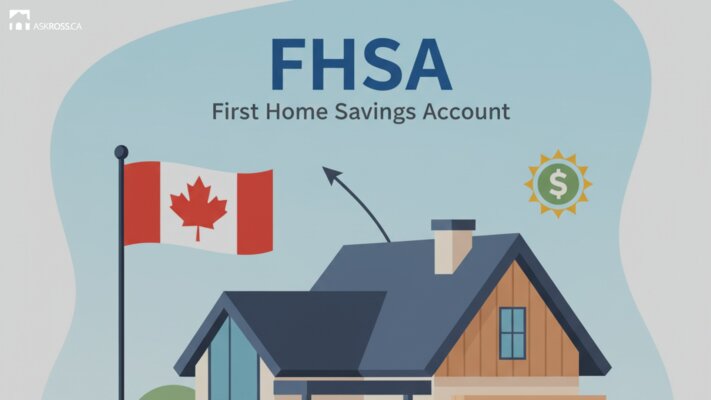
Can you open an FHSA if you owned a home years ago?
The First Home Savings Account is the best tool you’ve got. You’ve probably ruled it out already, because it says first home right there in the name.
It tests you the day you open the account, so ten years of renting is more than enough to put it back in play.
What does the FHSA actually give you?
- A deduction going in, and no tax coming out. Your contributions reduce your taxable income the way an RRSP contribution does, and when you pull the money out for a home, it’s tax-free. No other account in the country does both.
- Your room is $8,000 a year, up to $40,000 in your lifetime. If you’re around a 40% marginal rate, a full $8,000 a year hands you roughly $3,200 back at tax time. That’s a rebate you can still get, unlike the provincial one.
- The room doesn’t exist until you open the account. This is the detail that costs people real money. If you’re four years and two months clear of your last home, open it today and worry about funding it later.
- If you’re buying with a partner who also qualifies, you each get one. That’s up to $80,000 of combined room, which for a lot of people is the entire down payment.
↑↑ Back to the list at the top ↑↑

Can you use the RRSP Home Buyers’ Plan a second time?
Yes. And you probably have more ammunition here than someone buying their very first home.
You’ve been working another decade. Your RRSP is usually in far better shape than it was the first time around.
How much can you pull out of your RRSP?
- $60,000 per person, tax-free. That’s up from $35,000, and it’s per person, so if you’re buying with a partner who also qualifies, you’re looking at up to $120,000 toward one purchase.
- Your old HBP balance has to be at zero first. If you used the plan back in 2008 and you’re still carrying a balance, you can’t participate again until that balance is cleared as of January 1st of the year you withdraw. Pull your HBP statement before you build a plan around this money.
- Repayment runs 15 years, and it isn’t optional. Miss the annual minimum and the CRA adds the shortfall to your taxable income that year. That’s a rough surprise on top of a new mortgage payment.
- A separation can open this door early. If you’ve lived separate and apart for at least 90 days because your relationship broke down, you can generally use the HBP even if you fail the four-year test outright. There are conditions attached about disposing of the old home or buying out your ex’s share.
- Don’t choose between this and the FHSA. Use both. Nothing forces you to pick one, and $40,000 of FHSA savings plus a $60,000 withdrawal is a serious down payment.
Want to see what those two sources do to your purchasing power? Book a call, and we’ll run your actual numbers instead of guessing.
↑↑ Back to the list at the top ↑↑
What is the First-Time Home Buyers’ Tax Credit actually worth in 2026?
Almost every article you’ll find on this says the credit is worth $1,500.
It isn’t anymore, and the reason has nothing to do with housing.
How much is the Home Buyers’ Amount today?
- You claim $10,000, and you get up to $1,400 back. The Home Buyers’ Amount on line 31270 is calculated at the lowest federal tax rate, which fell to 14.5% for 2025 and 14% for 2026 onward. For anyone buying this year, the credit quietly lost $100, and half the mortgage sites in Canada still haven’t caught up.
- Same four-year rule, with a disability exception. If you qualify for the disability tax credit, or you’re buying a more accessible home for a related person who does, the first-time buyer condition drops away entirely.
- It shows up months after you need it. This is tax-time money, not closing-day money.
- It’s non-refundable, which matters more than it sounds. The credit reduces federal tax you owe. If you don’t owe any, it does nothing for you, so don’t build it into your closing budget.
↑↑ Back to the list at the top ↑↑
Do you qualify for the HST rebate on a new build?
This is where the biggest money is, and it isn’t close.
Ontario has three rebates stacked on new construction right now, and only two of them care whether you’ve owned before.
How much HST relief can you actually get?
The federal rebate takes up to $50,000 off
- The CRA’s rules cap it around $50,000 on a qualifying new home up to $1 million, then phase it down to nothing by $1.5 million.
- Your agreement has to be signed on or after March 20th, 2025 and before 2031.
- You get it once in your life. Neither you nor your spouse can have claimed it before, so unlike the FHSA and the HBP, this one really is a single shot.
Ontario has a first-time buyer rebate of its own
- The province rebates the full 8% provincial portion on a qualifying new home up to $1 million for first-time buyers, phasing down between $1 million and $1.5 million with a $24,000 floor.
- It borrows the federal four-year test, not the land transfer tax one, so a decade of renting puts it squarely back in play.
The enhanced rebate isn’t limited to first-time buyers
- The Ontario Enhanced New Housing Rebate returns up to $80,000 of the 8% provincial HST. It follows the eligibility conditions of the existing Ontario new housing rebate, so there are still hoops: the home has to be your primary residence, bought from a builder, and within the price and timing rules.
- What it does not do is ask whether you’ve owned before. You could have sold a house last year and still claim it, which is not true of either first-time buyer rebate above.
- Claim the federal rebate first if you’re eligible for both. The CRA’s ordering rule is that you take the federal first-time buyer GST rebate, then use the Ontario relief for whatever 5% portion is left over. In qualifying cases, the two stack to roughly $130,000 on a $1 million home.
The enhanced window closes March 31st, 2027
- You need an agreement of purchase and sale signed between April 1st, 2026 and March 31st, 2027, and your builder can credit it at closing now that the CRA has opened applications.
- Miss that window and your history decides everything again. Clear the CRA’s four-year test and the two first-time buyer rebates still get you most of the way there.
- Fail it, and you drop to the legacy rebates, capped at $24,000 provincially and $6,300 federally.
Your closing date decides the federal rebate
- You’re tested the day ownership transfers, not the day you sign. Here’s the CRA’s own example: sell in June 2022, take ownership in August 2026, and you fail, because 2022 sits inside the window.
- Take ownership in February 2027 instead, and you qualify. Same house, same buyer, same builder. Different year.
If you’ve written off new construction, run your numbers again before next March.
↑↑ Back to the list at the top ↑↑
Can you get a 30-year amortization?
Yes, and here’s where your lender is more generous than the CRA.
The insured mortgage rules use their own definition, and you only have to walk through one of its three doors.
Who counts as a first-time buyer for mortgage insurance?
Three separate doors, and you only need one
- You’re in if you’ve never purchased a home.
- You haven’t lived in a home you or your current partner owned in the last four years.
- Or you recently went through a marriage or common-law separation.
- You don’t need all three. One is the whole test.
A recent separation qualifies you on its own
- Say you owned and lived in the family home right up until last year. You fail the CRA’s four-year test outright, and you can still get the 30-year amortization.
- Divorce resets this test, in a way it never will for Ontario’s land transfer tax. The province will still charge you in full on the very same purchase.
New construction qualifies you regardless
- Buy a newly constructed home, and you get the 30-year amortization regardless of your first-time status.
- This is the same lesson as the HST rebate above. New construction keeps opening doors that resale simply doesn’t.
A 30-year amortization buys room, not savings
- Stretching a $600,000 mortgage from 25 years to 30 drops your payment by roughly $250 a month and adds tens of thousands in interest over the life of the loan.
- You’re buying approval and breathing room. Know which one you actually need.
↑↑ Back to the list at the top ↑↑
Can your partner still claim the Ontario refund if you owned before?
By now you might have written your Ontario refund off entirely. There’s one exception, and it matters enormously if you’ve re-partnered after a separation.
Ontario only disqualifies your spouse if you owned a home while the two of you were spouses.
How does the spousal timing rule work?
- A home you owned before you met doesn’t count against your new partner. If you owned from 2012 to 2015, divorced, and later partnered with someone who’s never owned, their refund survives, because you weren’t together when you owned it.
- In the right circumstances, your partner can claim the whole thing. If you’re both Canadian citizens or permanent residents and you never owned during the relationship, your qualifying partner may be able to claim the refund for both interests, up to the full maximum.
- Owning during the relationship kills it for both of you. If you owned that home while you were spouses, neither of you gets a refund, even if you never lived in it together.
- “Spouse” here is broader than married. Ontario uses the Family Law Act definition, which pulls in couples who’ve lived together continuously for three years. Your timeline matters more than your paperwork.
Talk to a mortgage professional before you decide whose name goes on title.
↑↑ Back to the list at the top ↑↑
What does this actually cost you at closing in Toronto?
All of this is theory until you’re looking at your statement of adjustments.
Toronto is where the split does the most damage to you, because you pay two land transfer taxes and get a rebate on neither.
What’s the real dollar gap on a $700,000 purchase?
- A $700,000 Toronto purchase costs you $10,475 in provincial land transfer tax, and another $10,475 municipally. That’s $20,950 in cash on closing day, and you can’t roll a dollar of it into your mortgage.
- Someone who has never owned gets $8,475 of that back, as two separate refunds: $4,000 maximum from Ontario and $4,475 maximum from the City of Toronto. They pay $12,475. You pay the full $20,950 because of a house you sold in 2015.
- This is the number that blows up deals. I’ve watched people find out three weeks before closing, and three weeks isn’t enough time to come up with $8,475.
- Run it before you offer, not after. Our land transfer tax calculator gives you the real figure in about thirty seconds.
↑↑ Back to the list at the top ↑↑
Advice from Ross Taylor Mortgages: Planning Your Return to Ownership
Canada runs three definitions of a first-time home buyer, and you can pass two while failing the third on the same purchase.
If you’ve rented for years, most doors reopen: the FHSA, the Home Buyers’ Plan, the tax credit, the new-build HST rebates.
What should you do before you write an offer?
- Ask your broker which of the three tests applies to you. If they can’t name all three, find another broker. The question is free, and the answer is worth thousands.
- Open your FHSA today, even if it sits empty. Contribution room only starts building once the account exists, so every year you wait is $8,000 gone for good.
- Consider buying a newly built home instead of a resale. The stacked HST rebates can reach roughly $130,000 on a qualifying new build, but only if your purchase agreement is signed by March 31st, 2027. Nothing else in this article comes close to that kind of money.
- If you’re separating, talk to someone before the paperwork is final. Whose name goes on what, and when, decides all three tests. Easy to plan around now, nearly impossible to fix afterward.
If you owned before and you’re coming back to the market, reach out. We’ll map out which programs you actually qualify for, and how much cash you’ll need to close.
↑↑ Back to the list at the top ↑↑
List of All FAQs: Returning to Homeownership in Ontario as a First-Time Buyer
How many definitions of first-time home buyer does Canada actually have?
- Three, and they don’t agree. The CRA uses a four-year lookback, the insured mortgage rules use a looser three-part test, and Ontario uses a lifetime “never owned” test.
- You can pass two and fail the third on the same purchase, which is exactly what happens if you owned years ago.
Why does Ontario refuse to give your first-time buyer status back?
- Its refund uses a lifetime test rather than a lookback, so there’s no waiting period that restores your eligibility.
- Ontario’s own Ministry of Finance page says you cannot re-qualify, and notes this may differ from federal programs.
Can you open an FHSA if you owned a home years ago?
- Yes, if you clear the four-year window on the day you open it. Your contributions are tax-deductible and qualifying withdrawals are tax-free.
- Your room is $8,000 a year up to $40,000 lifetime, and it only starts accruing once the account is actually open.
Can you use the RRSP Home Buyers’ Plan a second time?
- Yes, provided you’ve fully repaid any previous HBP balance by January 1st of the year you withdraw.
- The limit is $60,000 per person, or $120,000 if you’re buying with a partner who also qualifies, repaid over 15 years.
What is the First-Time Home Buyers’ Tax Credit actually worth in 2026?
- Up to $1,400, not the $1,500 most articles still quote. The credit is calculated at the lowest federal tax rate, which fell to 14% for 2026.
- You claim $10,000 on line 31270 of your federal return for the year you buy.
Do you qualify for the HST rebate on a new build?
- Yes, and Ontario’s enhanced rebate applies with no first-time buyer test at all, though it still follows the existing new housing rebate conditions. Combined relief can reach roughly $130,000 in qualifying cases.
- Your agreement must be signed between April 1st, 2026 and March 31st, 2027, after which your first-time status matters again.
Can you get a 30-year amortization?
- Yes, through any one of three doors: you’ve never purchased, you haven’t lived in a home you owned in four years, or you recently went through a relationship breakdown.
- If you’re buying a newly built home, you qualify regardless of your first-time status.
Can your partner still claim the Ontario refund if you owned before?
- Yes, if your ownership predated your relationship. Ontario only disqualifies your spouse if you owned while you were spouses of each other.
- Your partner may be able to claim the full maximum, covering both interests in the property.
What does this actually cost you at closing in Toronto?
- Up to $8,475 more than someone who has never owned. On a $700,000 Toronto purchase, that’s $20,950 in combined land transfer taxes with nothing coming back.
- You can’t add any of it to your mortgage. It’s cash, due on closing day.
Does owning a rental property I never lived in disqualify me?
- Not for the CRA’s four-year test, which turns on whether you lived there, not whether you owned it.
- It does disqualify you from Ontario’s land transfer tax refund, which counts any ownership interest anywhere in the world.
Does a home I owned outside Canada count against me?
- Yes, under both tests. The CRA’s rule covers homes in or outside Canada.
- Ontario’s test says “anywhere in the world” and means it literally.
If I inherited a share of a property, am I still a first-time buyer?
- Not for Ontario’s refund. The rules state the method of acquiring the home is not relevant, so a gift or inheritance disqualifies you the same as a purchase.
- You may still qualify federally, since the CRA asks whether you lived there as your principal residence.
How long do I have to claim the Ontario land transfer tax refund?
- Most buyers get it credited instantly at closing through their lawyer when the deed is registered.
- If it wasn’t claimed then, you have 18 months from registration to apply, and you must occupy the home as your principal residence within nine months of the transfer and be a Canadian citizen or permanent resident.
Can I use the FHSA and the Home Buyers’ Plan on the same purchase?
- Yes, and you probably should. No rule forces you to choose between them.
- Combining $40,000 of FHSA savings with a $60,000 HBP withdrawal covers a serious down payment on a GTA purchase.
Should I buy in Toronto or just outside it?
- Toronto is the only Ontario municipality charging a second land transfer tax, so an identical home in Mississauga, Markham or Vaughan saves you the entire municipal portion.
- On a $700,000 purchase, that’s $10,475, which is more than most people’s renovation budget.
↑↑ Back to the list at the top ↑↑

Ross Taylor Mortgages
If you want great service from someone you can trust – reach out to us today.
Get quick answers to your questions, no matter how difficult – 7 days a week.